Building reliable software for the quantum computing era
Published:
Quantum computing promises unprecedented processing power, with the potential to transform fields from medicine to finance. However, today’s quantum computers operate in a noisy, error-prone environment, and their programming tools remain fragmented across different hardware vendors.
To take on these challenges, the EU-funded Q-VERSE (Quantum Virtual Ecosystem for a unified Runtime for agnostic Software Engineering) project is bringing together leading European research institutions and industry partners.
Q-VERSE is recognised as part of the European Quantum Flagship, which is a 10-year European Union initiative launched to establish Europe as a global leader in quantum technologies. The project aims to create open, standardised software tools that allow developers to write applications that run reliably across different types of quantum hardware, without relying on a singular provider.
Simula to lead quality and testing
Simula will lead Q-VERSE’s Work Package 4 (Quantum Enablers and Integration Components). Simula’s efforts are headed by Dr. Shaukat Ali (Head of Department for Engineering Complex Software Systems) and Dr. Paolo Arcaini, Chief Research Scientist with Simula. The Simula team will focus on ensuring quantum software is reliable, fast, and accurately tested:
- Hybrid quantum-classical workflows: Quantum computers rarely work alone; they operate alongside classical supercomputers. Simula is leading the effort to develop intelligent workflows (using AI techniques such as Graph Neural Networks and Reinforcement Learning) that automatically split complex tasks between standard computers and quantum processors to maximise speed and efficiency.
- Automated testing and noise mitigation: Unlike traditional software, quantum outputs are probabilistic, making bugs harder to spot. Simula will build a flexible testing framework to automatically detect software flaws and use machine-learning tools to filter out real-world hardware noise.
- Standardised benchmarking: Simula is designing a comprehensive performance-tracking system to measure how well quantum applications perform in real time, helping developers pinpoint system slowdowns or hardware degradation.
"Quantum hardware is evolving rapidly, but software tools have lagged behind," explains Dr. Ali. "Our focus will be to apply rigorous software engineering principles; automated testing, intelligent hybrid orchestration, and noise mitigation so that developers can build trustworthy quantum applications ready for real-world use."
Real-world industrial impact
The tools developed in Q-VERSE will be validated across five large-scale industrial use cases, including railway scheduling, financial portfolio optimisation, pharmaceutical drug design, and telecommunications data analytics.
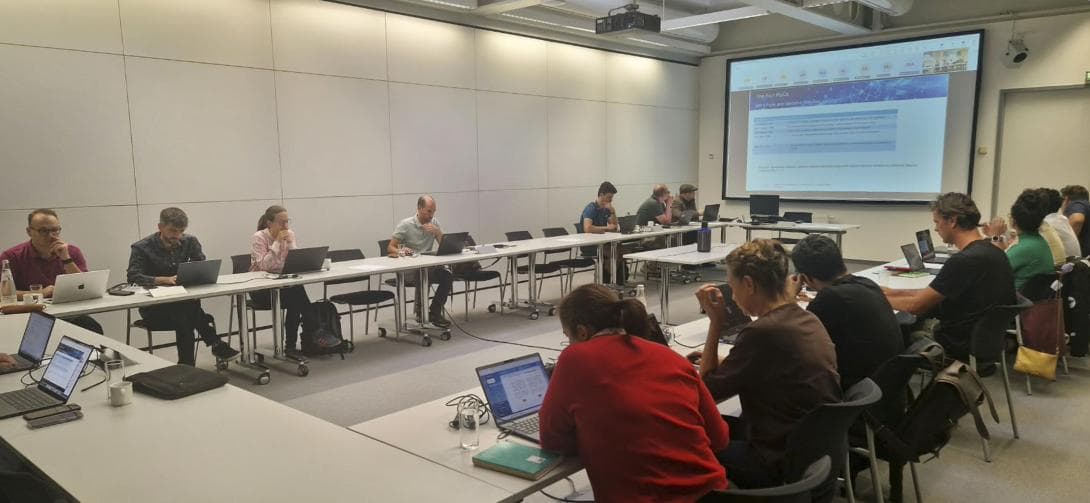
Simula is working alongside 12 partner organisations from 6 European countries. The 36-month project is supported by funding from the European Union’s Horizon Europe programme.
More information on the Q-VERSE project is available on its project page.