Celebrating 25 years of Simula
Published:
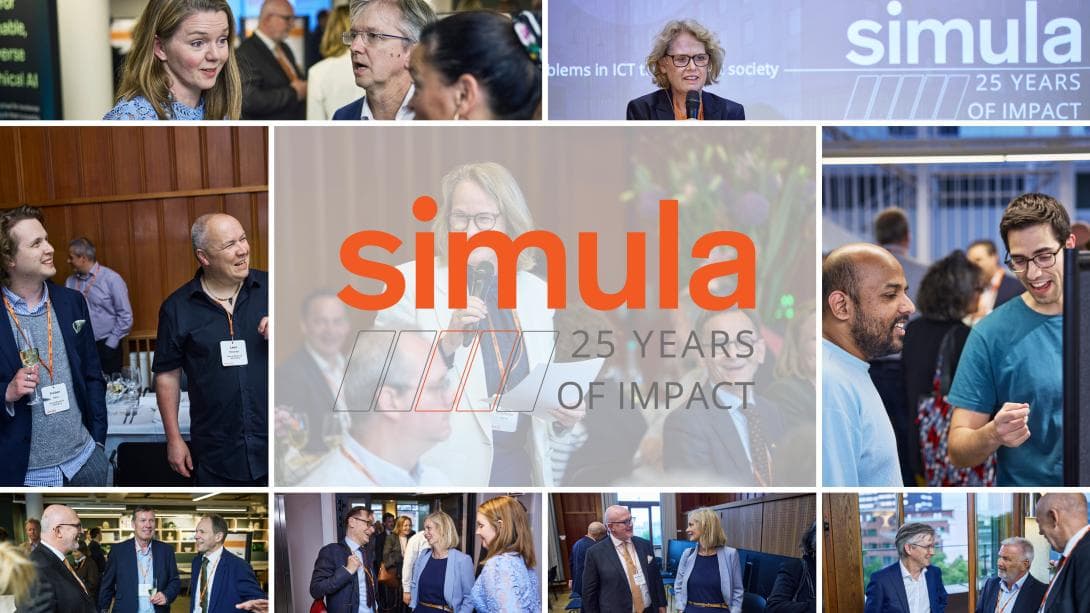
On June 2nd, Simula marked its 25th anniversary by bringing together the people who have shaped the institute over the past quarter century. Employees, alumni, collaborators, partners, founders and friends gathered to celebrate 25 years of impact.
From a bold political initiative to research at the highest international level
25 years ago, Simula was born out of a parliamentary decision tied to the redevelopment of the former Oslo airport at Fornebu.
The government wanted to establish “Norway’s Silicon Valley” and hosted a national competition among Norwegian research groups in computing sciences. A handful of researchers from the University of Oslo won the competition, and established Simula Research Laboratory in 2001.
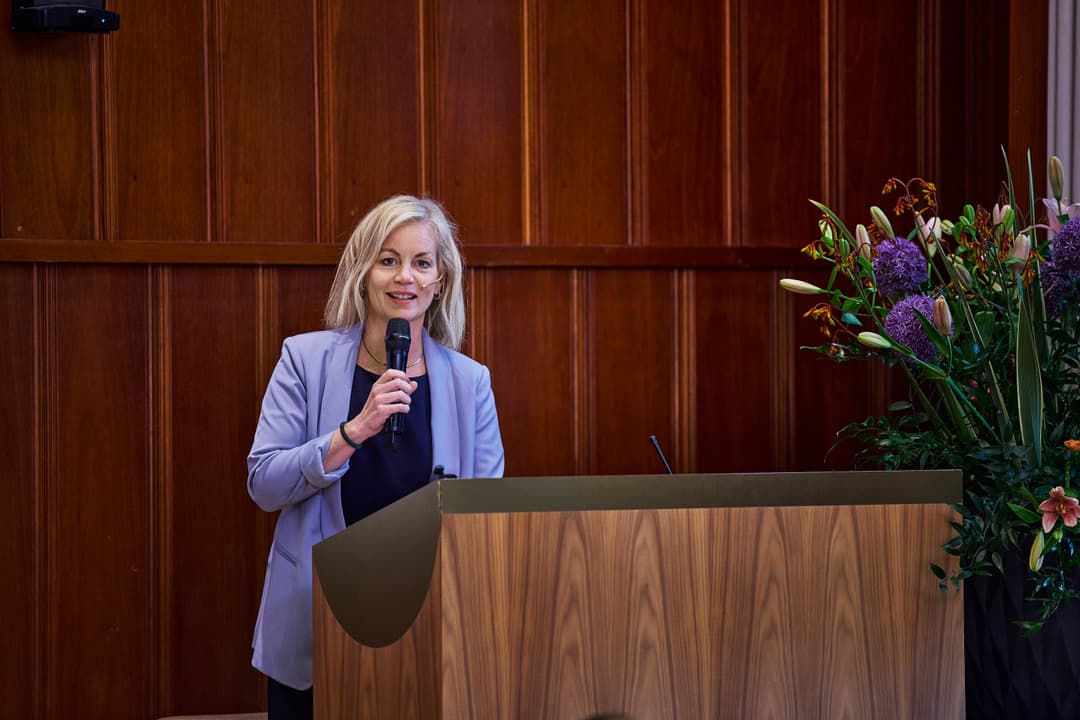
Few people are better placed to reflect on what that investment has meant than the Minister of Research and Higher Education herself. Sigrun Aasland opened the celebration and highlighted Simula’s development into one of Norway’s most impactful research institutes.
“The establishment of Simula was a political choice (...) with a bold mandate to conduct research at the highest international level within ICT, to educate researchers and to create innovation. You delivered on these ambitions at the highest level.”
Sigrun Aasland, Minister of Research and Higher Education
She also pointed to something that is easy to overlook in a world that rewards speed: the quiet, persistent value of basic research.
"It is also worth remembering that Simula’s impact did not appear overnight. Simula’s success can be traced back to its focus on conducting long-term basic research, which over time has enabled Simula to lead the way in AI, cybersecurity, and digital innovation."
Aasland emphasised the role in advancing trustworthy and secure AI, strengthening collaboration between research and industry, and contributing long-term basic research with clear societal relevance.
“There is no doubt that you have played a vital role in Norwegian society over the past 25 years,” Aasland said.
Aaslands speech is made available on regjeringen.no.
“We had to be excellent”
Next to take the stage was Professor Aslak Tveito. Simula's CEO for over 20 years, and as Master of Ceremonies Marianne Aasen put it, the institute's “very own Grandmaster”.
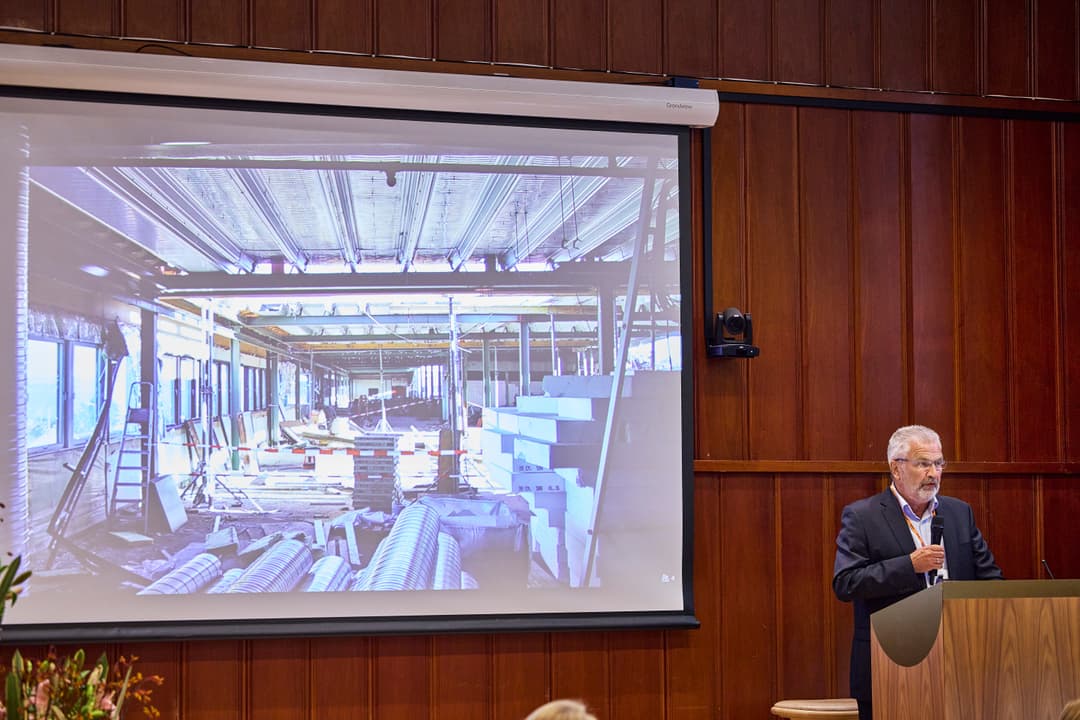
Tveito opened with an image of the original Fornebu offices mid-renovation. A fitting reminder that the early years were anything but smooth. Simula was met with scepticism and resistance from the start.
The response was to double down on quality.
"We knew that in order to maintain the support from the Ministry and the Parliament, we had to do very well. Not decent, not promising, not an interesting initiative. We had to be excellent."
That commitment paid off. In the 2025 national evaluation of mathematics and ICT, Simula was assessed as the strongest institution in the country in terms of quality and impact. Tveito described the moment simply:
"When I read that report, I closed my door and I cried. It was the result of many years of very hard work by many remarkable people."
Professor Aslak Tveito, former CEO of Simula
The culture that makes it work
In 2023, Tveito stepped down and Lillian Røstad became Simula's new CEO. In her remarks, she spoke about what she found when she arrived, and what she believes has driven recent success. Above all, it comes down to people.
"One thing I learned quickly when I joined is that the people here have a really big heart for Simula."
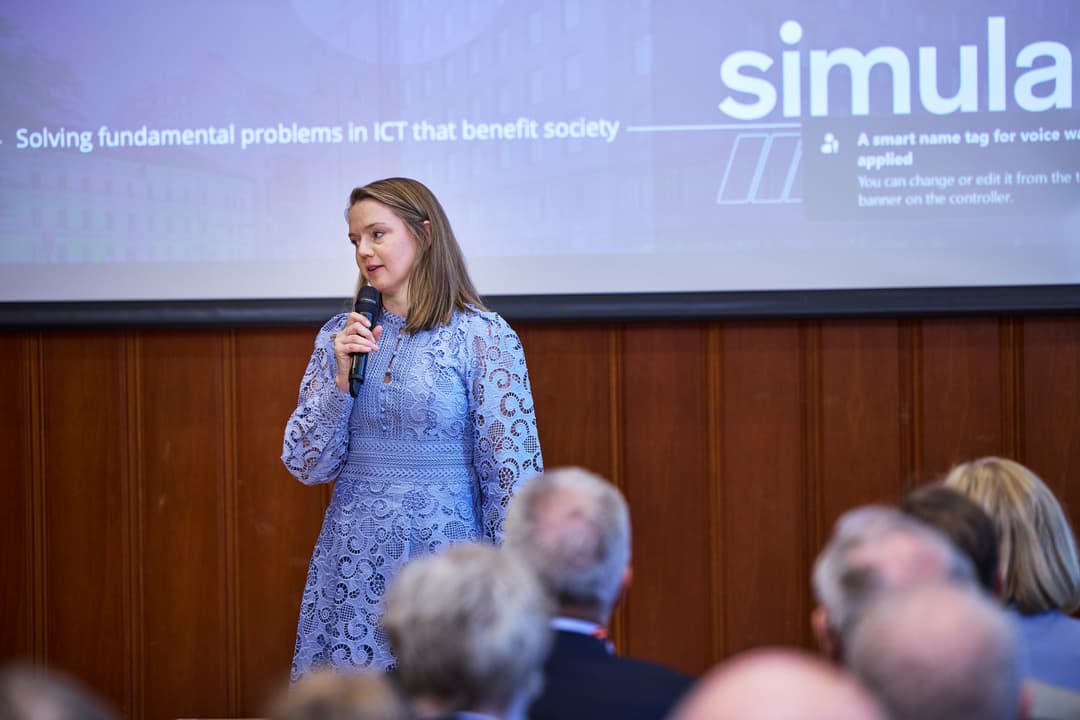
Under her leadership, Simula has secured a national AI centre, two quantum centres, an ERC Advanced Grant and a growing portfolio of industry partnerships. But none of it, she was clear, happened by chance.
"Great results come from great effort, and the great people at Simula have certainly put in a massive effort. This is not something that happened overnight."
Lillian Røstad, CEO of Simula
The challenge now, as Røstad put it, is a welcome one: scaling up to deliver on the opportunities ahead.
Long-term research with present-day relevance
The anniversary programme also featured presentations from researchers across Simula’s five research areas, highlighting developments in software engineering, artificial intelligence, scientific computing, communication systems and cyber security.
Researchers shared examples ranging from AI systems for healthcare and environmental monitoring to mathematical models for brain research, secure communication infrastructure and privacy-enhancing technologies.
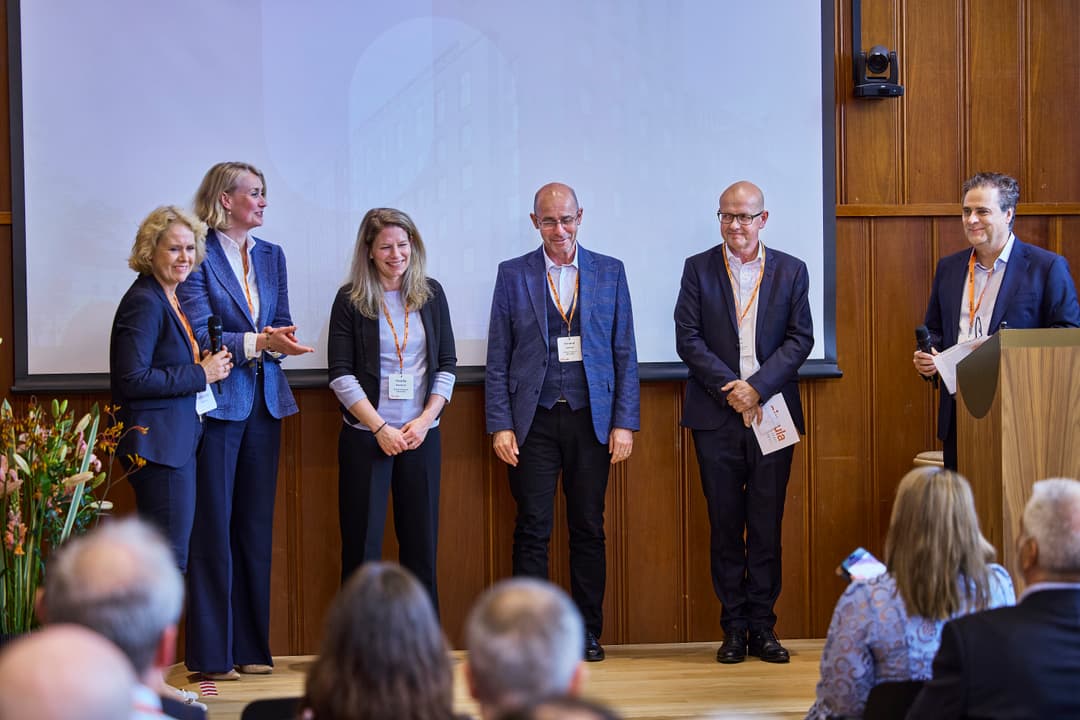
A recurring theme throughout the presentations was Simula’s long-standing focus on combining fundamental research with practical impact.
As Professor Olav Lysne described it, the guiding principle established early in Simula’s history was:
“Long-term research with present-day relevance.”
The next 25 years
The plenary programme concluded with a guest presentation from Fredrik Heintz of Linköping University, who reflected on the rapid pace of AI development and the growing importance of Nordic and international collaboration in building AI systems that are secure, trustworthy and aligned with our shared values.
The anniversary served as both a celebration of what has been achieved and a reminder that many important challenges still lie ahead. As Minister Aasland said in closing:
"To sum up: With your outstanding research environments – your strong networks and cross-sector partnerships – your excellent communication of knowledge – and, perhaps most importantly, with your curiosity – you give us all the knowledge preparedness we need in uncertain times.
Sigrun Aasland, Minister of Research and Higher Education
Simula will continue to reach higher, dig deeper, and never be content.