How can a data centre “breathe”?
Published:
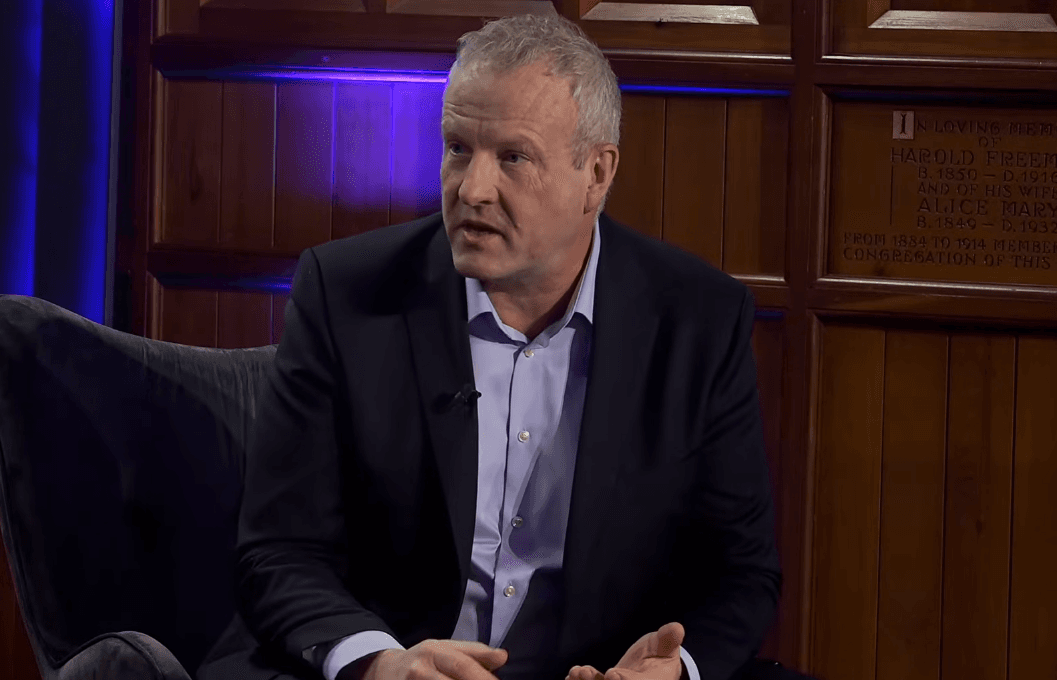
At the World Economic Forum in Davos, SimulaMet researcher, Professor Haakon Bryhni, described a future where data centres breathe with the power grid, where compute capacity is traded like a commodity and become part of a circular energy economy.
Professor Haakon Bryhni also holds the position of Chairman in Tydal Data Center. This role is independent of his position at SimulaMet. Simula Research Laboratory and SimulaMet have no affiliation with this company.
This article is based on the panel discussion “Building and Pricing Intelligence” at the World Economic Forum annual meeting 2026 in Davos. The panel debate was moderated by Sarah Backhouse with speakers Silvia Console Battilana and Haakon Bryhni.
Data centres provide the electricity, cooling, networks, and massive computing infrastructure that AI requires. As global demand for AI grows, so does the pressure on energy systems.
Today’s data centres run at a constant load. But what if they could expand and contract their energy usage in cooperation with the power grid?
Bryhni explained how a job actually can, in a split second, be moved from one physical data centre to another, with methods such as Network Functions Virtualization (NFV) and Cloud-Native Network Functions (CNFs) and Software Defined Networking (SDN).
“This flexibility makes it possible for the data centres to adjust energy consumption dynamically, in close cooperation with the energy market”, said Bryhni.
He calls them breathing data centres. “So when everyone wants power, the data centre can back off a little or send off the job to another data centre”.
Rethinking how computing power is priced
For data centres to interact with energy markets, the economic model of computing has to evolve. Bryhni described a shift from traditional pricing to a more market-based system.
“What we see is that pricing for data centres is changing from the traditional pricing of kilowatts of capacity per GPU (graphics processing unit) and the price of power, into an auction,” he said.
He explained how AI computation can be described in terms of tokens.
“If you think about AI, very often you’re talking about tokens. Processing one token, which can be a word or a few characters, requires a little GPU, a little memory, a little storage, and also a little energy.”
Tokens become a natural unit for pricing, where large consumers pay per millions of tokens in auctions.
Inspired by the Nordic energy market
The idea is based on the advanced economic model of the Nordic energy market.
“It works on a bidding interval with an advanced auction happening every 15 minutes. This can be combined with data centre capacity auctions,” he explains.
Outside his academic work, Bryhni also has experience from the data centre industry. He explains how they are incorporating these capabilities.
“By having a huge battery and be able to work with the new flexibility energy market, a data centre can also charge a battery at low rates, and use the battery instead of the grid at high rates.”
From waste heat to useful energy
Bryhni emphasised that while huge amounts of data centre capacity will be needed in the future, it is equally important that resources are distributed, optimised, and reused.
“When the processor is finished with a job it’s hot and needs constant water cooling. Let's send the water off for agricultural production, for heating of buildings or any other good use for the environment.”
The goal is to create a circular economy around data centres. “In the future, I think this should be a demand, maybe even from the government, that data centres are reusing energy. Because energy is a precious resource.”
References
A recording of the panel discussion is available on YouTube. Starting from 06:42:46 (youtube.com).