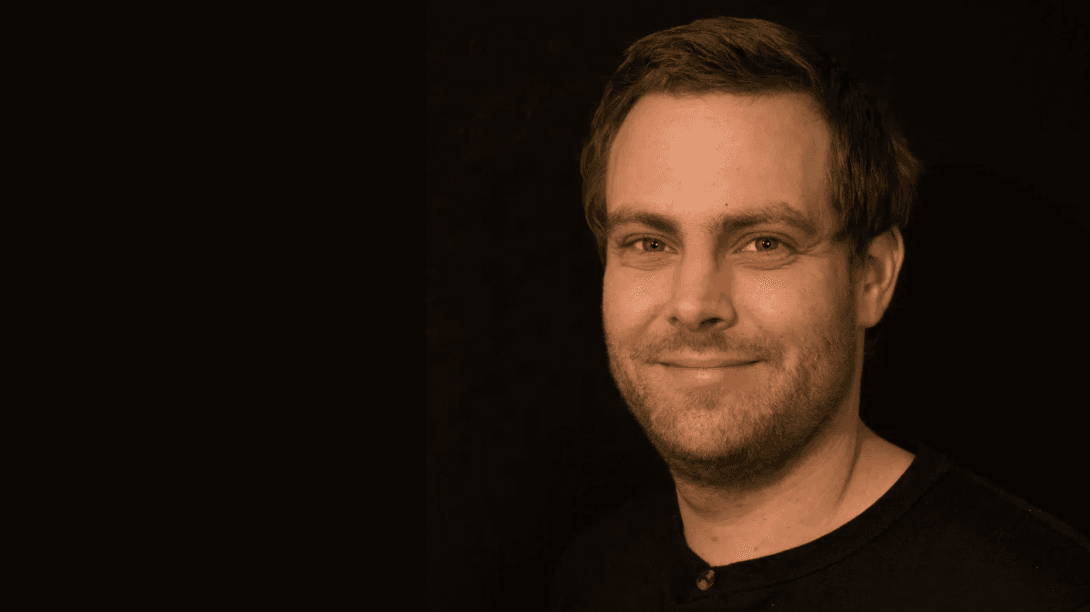
Spotlight: Henrik Nicolay Finsberg
Published:
We recently interviewed Henrik Nicolay Finsberg, a Chief Research Engineer at Simula, discussing his journey into scientific computing, computational physiology, and the future of digital twin technology in healthcare.
What is your educational background, and how did you become interested in your field?
I did my master's studies at NTNU in Trondheim in the program for physics and mathematics, specializing in applied mathematics. During the end of my studies, I started to look for relevant jobs in the Oslo area. I found this research institute called Simula that worked on solving differential equations for simulating the heart, which sounded very interesting. A few months later and under the supervision of Simula Research Laboratory and University of Oslo, I started a PhD on the topic, “Patient-specific computational modeling of cardiac mechanics”, and I never looked back.
What are your current research projects or areas of focus in your field?
One important focus area of my research is to use mathematical modeling to help us understand human physiology.
For example, we can build mathematical models of the heart, starting with a single heart cell and embedding this into a heart tissue that can conduct current and ultimately contract against a circulatory system. We can then change properties of cells and see how this could alter the conduction of current or the pumping of blood.
One application we are working on is understanding whether a drug can be dangerous for the heart. If we know how the drug acts on a single cell, then we can test how it will affect the whole heart using simulations. Ultimately, the goal would be to have a model that is specific to the heart of a patient, which is commonly referred to as a digital twin. This digital twin can then be used to potentially find the best possible treatment at the level of the individual.
Another application is related to what happens during severe blood loss, which is relevant for soldiers wounded on the battlefield. Some of these soldiers develop arrhythmias even after being stabilised, and we are using mathematical models to simulate these conditions to see if the model can suggest any preventive therapy.
How does your research contribute to the advancement of your field, and what real-world applications can it benefit?
The advancement of such computer models could, as a long-term goal, benefit clinicians to both help in their decision-making process and identify the optimal treatment strategy for the individual.
Imagine a future where you could go to the hospital, take some measurements and create a digital version of your heart and use this virtual heart to test which treatment would be optimal for you or whether a specific drug could be dangerous.
What do you see as the biggest challenges or unsolved problems in your field today?
One of the most significant challenges in my field today is ensuring reproducibility, which is commonly referred to as the reproducibility crisis. In particular, when developing code for building computational models, we need to make sure that the code we develop is easy to use by others and that it keeps giving the same results as when originally published. This is important for transparency and ensures that the research community can save time when reproducing or building upon published results.
At Simula there is a dedicated team of research engineers, including myself, that work on ensuring reproducibility by incorporating best practices from software development. There is more information about this ongoing work at Simula here.
What advice would you give students or aspiring scientists looking to pursue a career in your field or ICT research more broadly?
I believe it is important to learn good habits when it comes to software development. For example, learning effective routines for testing, documentation and packaging. Getting familiar with Git and GitHub and learning tools to automate your workflows will make you much more productive. Also, by openly sharing your work on GitHub, your work will likely benefit others, and you might get connections that could open new doors in the future.
—
Thanks to Henrik for contributing to this researcher profile.
At Simula, we take pride in our people, with over 150 scientific researchers, fostering a collaborative and innovative environment for science research.