Centre for Digital Neurotechnology
The Centre for Digital Neurotechnology at Simula Research Laboratory targets excellent research within digital technologies, including predictive modeling, data fusion, brain-inspired artificial intelligence, high-performance computing, and simulation technologies, to analyse, predict, or modulate the nervous system in order to understand or influence its structure, function and health.
As brain disorders have become the leading cause of health loss world-wide, brain health and neurotechnology have moved to the top of the research and innovation agenda, in Norway and globally.
“The human brain is, quite simply, the most remarkable object that we know of. And despite stunning scientific and technological progress over the past century, we are still far from truly understanding how it works.”
Marie E. Rognes, Centre Director
The Centre for Digital Neurotechnology builds on ground-breaking research, enabling technologies, and impactful partnerships within the neurosciences, scientific computing, and data science, developed at Simula over more than a decade. The Centre is organised with a core of Simula-based Investigators, connected to an international, interdisciplinary, and intersectorial network of domain experts.
Simula established the new Centre for Digital Neurotechnology in October 2026, led by Marie E. Rognes as Centre Director, with Klas H. Pettersen as Deputy Director, and Rachel Thomas as Director for Strategy and Development.
Principal investigators
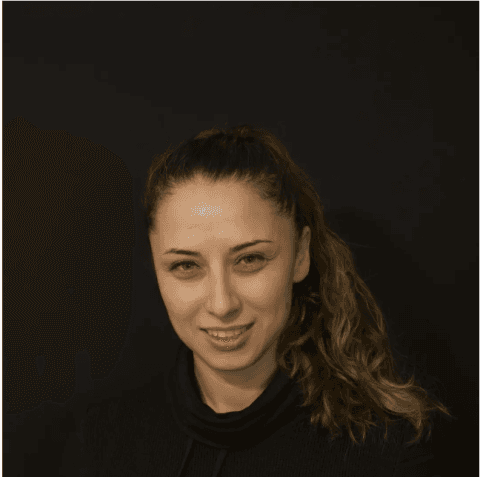
Evrim Acar
Establishing explainable machine learning frameworks to reveal patterns in multimodal data, from omics to neuroimaging
About the group
We are a research group based in the Department of Data Science and Knowledge Discovery at SimulaMet. The principal investigator is Evrim Acar, who is a Chief Research Scientist with a computer science background.
We are interested in developing and applying data science methods, in particular multimodal machine learning approaches, to extract interpretable patterns from complex (multimodal,
temporal) data with the ultimate goal of deciphering complex systems such as the human brain and human metabolome.
Longitudinal omics and imaging datasets as well as data from
wearables are collected to understand these complex systems, and we believe that all these datasets should be jointly analyzed to facilitate precision health and medicine. It is therefore
crucial to develop inherently interpretable multimodal methods that can turn such heterogeneous multimodal data into insights, e.g., early risk markers, diagnostic markers as well
as person-specific trajectories of diseases.
Research themes: Multimodal machine learning, data fusion, (Coupled) tensor decompositions, Reproducibility, interpretability, Longitudinal data analysis, Omics & neuroimaging data analysis
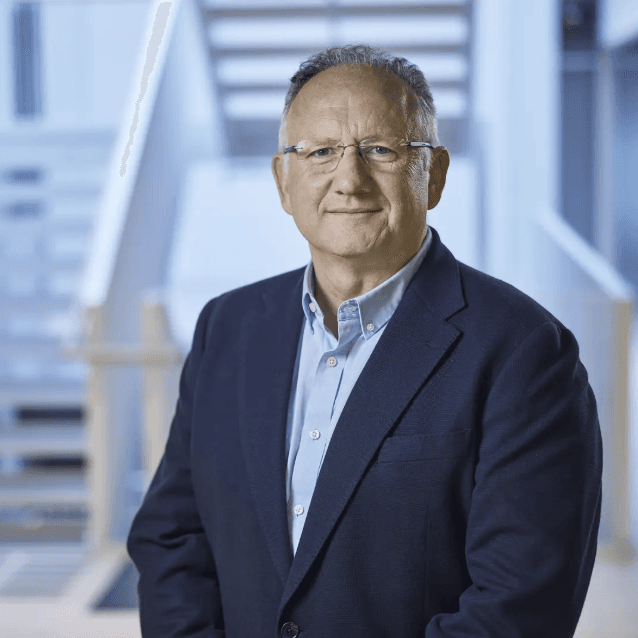
Baltasar Beferull-Lozano
Modeling higher-order brain dynamics for human-machine interaction, embodied augmentation, and brain-inspired computing
About the group
We are researchers based in the Department of SIGIPRO at SimulaMet. The principal investigator is Baltasar Beferull-Lozano, who is a Chief Research Scientist, Head of Department and Director of the SURE-AI Centre.
We are interested in how the brain encodes intent and learning, and how these neural signals adapt and vary across people, tasks, and environments. We believe that rigorous mathematical models of brain dynamics, used to anticipate intentions and guide machines, are key to turning neuroscience into practical engineering. It is therefore crucial to design robust, closed-loop neurotechnologies that advance real-time embodied robotic control, clinical rehabilitation, and efficient brain-inspired computing.
Research themes: Topological signal processing, Brain-computer interfaces, Embodied robotics, Predictive brain modeling, Neuromorphic computing, Machine learning
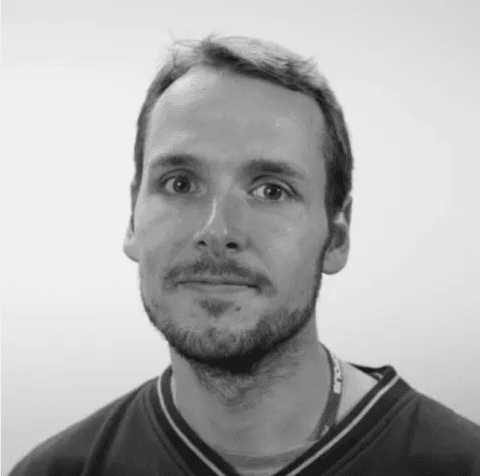
Miroslav Kuchta
Developing accurate and efficient numerical methods for simulating brain mechanics
About the group
We are a research group based in the Department of Numerical Analysis and Scientific Computing at Simula Research Laboratory. The principal investigator is Miroslav Kuchta who is a Senior Research Scientist.
We are interested in algorithms enabling digital twins of fundamental processes in the brain. To this end we develop mathematical models together with their accurate and robust discretization schemes and tailored efficient solvers.
Research themes: Finite element methods, Mixed-dimensional models, Multiphysics models, Iterative solvers and preconditioners
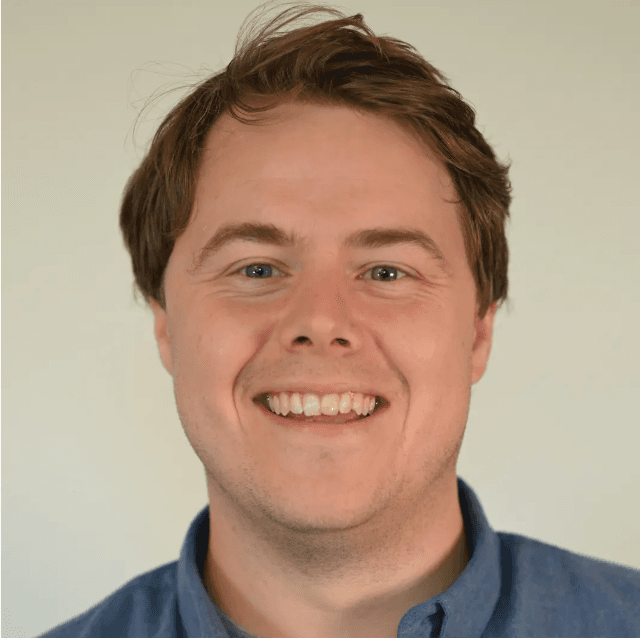
Mikkel Lepperød
Understanding how the brain stores memories and acts on the world, using brain-inspired AI and causal inference
About the group
We are a group at Simula Research Laboratory. The principal investigator is Mikkel Pawlowski Lepperød, who is a Senior Research Scientist at Simula and an adjunct associate professor at the University of Oslo.
We are interested in how the brain stores what it experiences, retrieves it later, and uses it to act in a world that keeps changing, which is a setting where today's AI systems still tend to fail. Our working hypothesis is that memory is a central mechanism of the perception, cognition, action loop supporting flexible intelligence, since an agent that acts on the world can test what it remembers and correct it. It is therefore crucial to build models of memory and spatial maps that can be tested against brain recordings, and to develop methods that estimate cause and effect from brain stimulation, so that future neurotechnologies can be guided by how neural circuits actually interact.
Research themes: NeuroAI, Brain-inspired artificial intelligence, Memory and cognitive maps, Causal inference from brain stimulation, Spatial navigation, Active, embodied learning
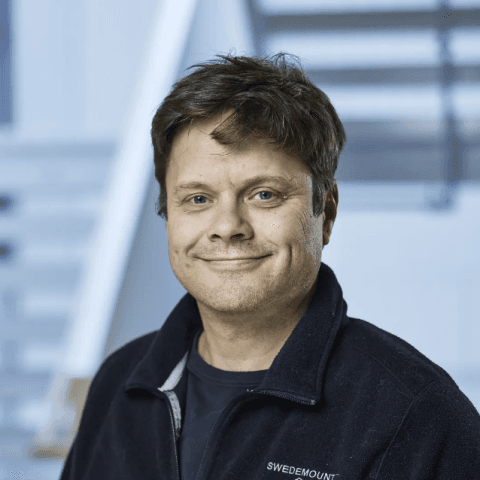
Kent-Andre Mardal
Creating the next-generation of numerical algorithms and software tools to model the complex, multiscale processes of the human brain
About the group
We are a research group based in the Department of Numerical Analysis and Scientific Computing at Simula Research Laboratory. The principal investigator is Kent-Andre Mardal, who is a Chief Research Scientist.
The discovery of the glymphatic system in 2012 and the re-discovery of the meningeal lymphatic system in 2015 puts computational fluid dynamics, in multi-physics setting, at the center of neuroscience research in terms of the need for sleep and the development of dementia. These systems are advance, complex and deserve proper numerical consideration in terms of accurate, image based, subject-specific analysis for individual assessment. As such, these discoveries in neuroscience also form a frontier in computational science where numerical algorithms are challenged by multi-physics, complex geometries, multi-scale and non-linear mechanisms of the problem.
Research themes: Computational neuroscience, Computational fluid dynamics, Open source scientific software development, Finite element analysis, Machine learning
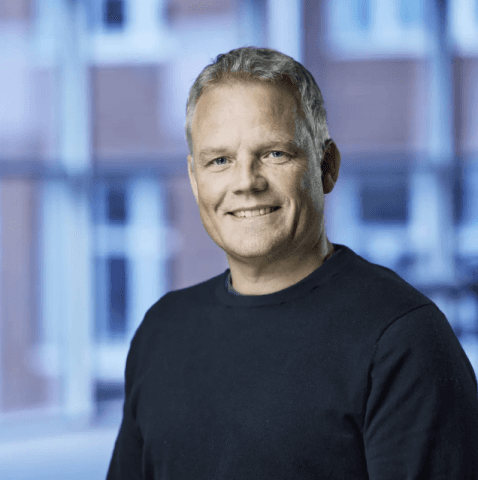
Klas H. Pettersen
Understanding brain activity based on recordings of electric activity and how to activate neurons through electric or magnetic stimulation
About the group
We are based at SimulaMet. The principal investigator is Klas Pettersen, who is the director of Simula Metropolitan Center for Digital Engineering.
We study how neurons encode the external world and how this code can be deciphered through recordings of electrical and magnetic fields, as well as the reverse: how neural activity can be modulated through electrical or magnetic stimulation. Reading and writing these neural signals lays the foundation for brain-computer interfaces that translate brain activity into functional action. Our research spans multiple spatial scales, ranging from single-cell and multi-unit recordings to local field potentials and scalp EEG. Much of our work and theoretical framework is summarised in our book, Electric Brain Signals (Cambridge University Press, 2025).
Research themes: Electric field recordings, Brain solute transport, Artificial Intelligence, AI safety, Mechanistic interpretability
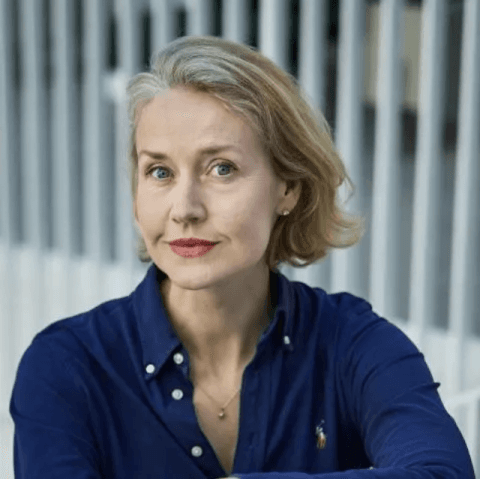
Marie E. Rognes
Pioneering digital twins of brain multiphysics, from mathematical foundations to integrating geometry, hidden dynamics and large neurodata
About the group
The Rognes research group is based in the Department of Numerical Analysis and Scientific Computing at Simula Research Laboratory. The principal investigator is Marie E. Rognes, who is Chief Research Scientist at Simula, and Deputy Director of the K. G. Jebsen Centre for Brain Fluid Research.
We seek to push the mathematical and computational frontier for predictive modelling of brain multiphysics – from simulating the electrical, ionic and fluidic landscape of neurons, astrocytes and extracellular space at nanoscale resolution, to studying the interplay between brain pulsatility, fluid dynamics and solute transport across spatiotemporal scales. By developing and applying open simulation technology, we target fundamental research questions in the neurosciences, focusing on brain clearance and neurodegeneration, interactions at the gliovascular and glioneuronal interfaces, and the mechanisms of sleep. In close collaboration with clinicians and experimentalists, we translate in silico discoveries into actionable insights on brain function in health and neurodegenerative disease.
Research themes: Numerical methods for coupled partial differential equations, Brain multiphysics, High-performance algorithms, Differentiable software, Brain clearance and neurodegeneration, Astrocytes and sleep
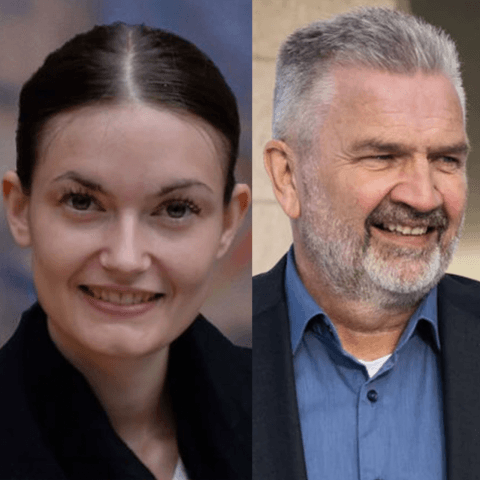
Karoline Jæger & Aslak Tveito
Understanding how electrical signals arise in neurons and groups of neurons through computational models, from individual ion channels to interacting cells
About the group
The Jæger/Tveito group is jointly led by Karoline Horgmo Jæger (PhD, Senior Scientist) and Aslak Tveito (PhD, Professor).
We are interested in using the computational power now available to study neuronal electrodiffusion with greater accuracy than previously possible. In particular, we aim to understand electrodiffusion around individual ion channels and
incorporate this knowledge into models of whole cells and groups of interacting cells. We believe that connecting these scales is essential for understanding how local electrical and ionic conditions influence neuronal activity. This knowledge can help explain how these
processes contribute to brain function in health and disease.
Research themes: Computational neuroscience, Electrodiffusion, Poisson–Nernst–Planck equations, Nanoscale modeling
Kristian Valen-Sendstad
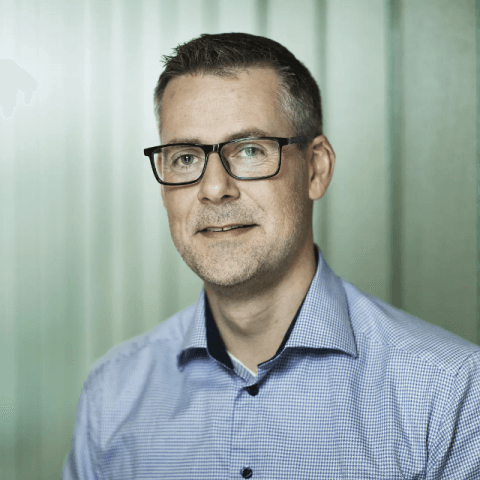
Understanding how blood flow and vascular wall mechanics interact to drive vascular adaptation, remodelling, and disease
About the group
Accelerating patient-specific in-silico predictions of drug delivery in the brain.
We are a research group based in the Department of Computational Physiology at Simula Research Laboratory.
The principal investigator is Kristian Valen-Sendstad, who is a Chief Research Scientist/Research Professor.
We study how blood flow and mechanical forces interact with the vascular wall, and how these interactions contribute to vascular adaptation, remodelling, and disease. We use high-fidelity computational modelling to reveal physical processes in blood vessels that are difficult or impossible to measure in vivo, and to understand how mechanical loading affects vascular structure and function.
By connecting vascular mechanics to vascular biology, we aim to uncover mechanisms of vascular disease and ultimately contribute to improved prevention, diagnosis, and treatment, including for diseases of the cerebral circulation.
Research themes: Vascular mechanobiology, Blood flow and vascular mechanics, Fluid–structure interaction, High-fidelity computational modelling, Cerebrovascular disease
Emerging investigators
Cécile Daversin-Catty
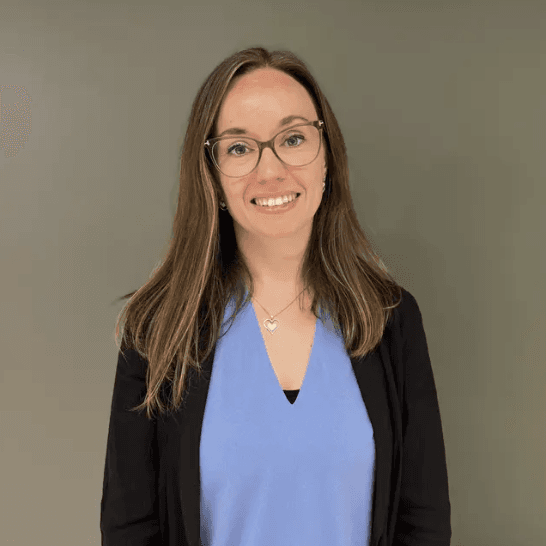
Accelerating patient-specific in-silico predictions of drug delivery in the brain
About the group
We are a research group based in the Department of Numerical Analysis and Scientific Computing at Simula Research Laboratory. The principal investigator is Cécile Daversin-Catty , who is a Senior Research Scientist.
We are interested in generating patient-specific predictions of drug distribution within the human brain. We believe that such in-silico modeling is a pivotal tool for personalised drug dosing. It is therefore crucial to make these methods efficient yet reliable to be viable in a clinical setting.
Research themes: In-silico drug delivery, Patient-specific predictions, Model order reduction.
Ada Johanne Ellingsrud
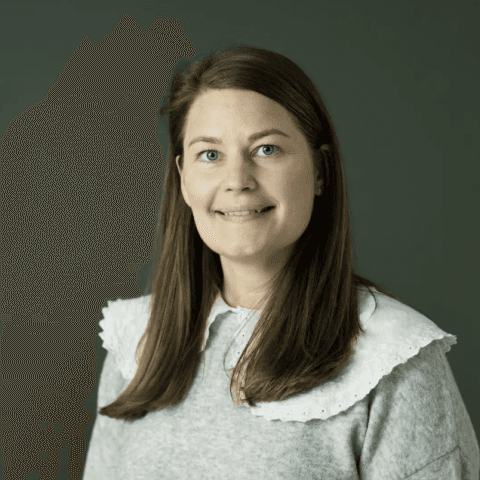
Modeling biophysics of brain tissue to decode electrical, chemical, and fluid interactions in health and disease
About the group
We are interested in how coupled electrical, chemical, and fluid dynamics govern brain tissue at the microscopic level, and how these processes break down during pathological states.
We apply physics-based mathematical modeling and cell-by-cell numerical simulations to provide insight into mechanisms that cannot be directly measured. By integrating high-resolution cellular imaging and experimental insights with novel computational tools, our research aims to bridge the critical gap between dense structural data and sparse functional observation.
Research themes: Geometrically explicit cell modeling, Ionic electrodiffusion and osmosis, Glia-neuron interactions